
Humans Above The Loop
We are in an Engel’s Pause before the full effect of the agentic transformation: this transformative technology exists but its economic impact has not yet materialised. Where do we humans fit now?
SOFTWARE ENGINEERINGAGENTIC DEVELOPMENT
5/21/20264 min read


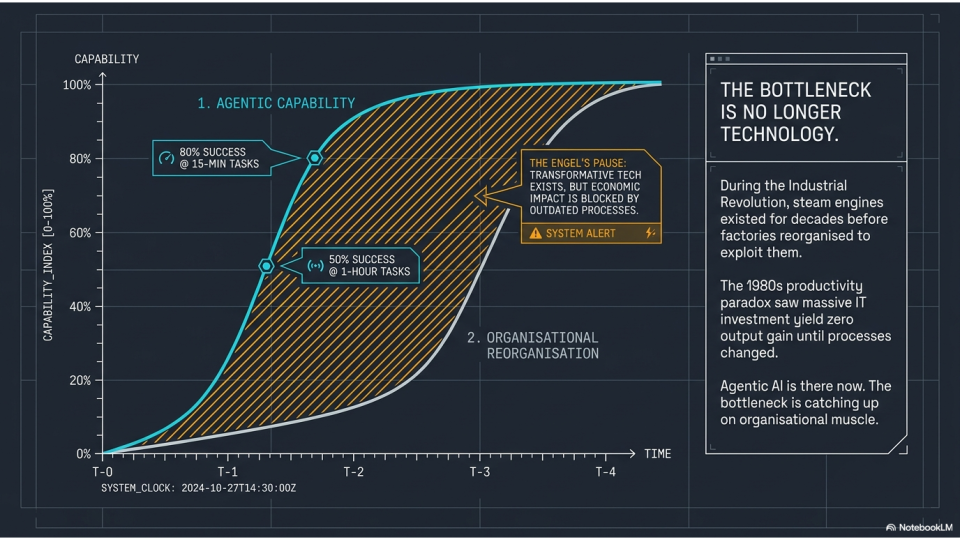
Engel’s Pause
We are in an Engel’s Pause: a period where transformative technology exists but its economic impact has not yet materialised. During the Industrial Revolution, steam engines existed decades before factories reorganised to exploit them. The productivity paradox of the 1980s and 90s saw massive IT investment with little measurable output gain until businesses redesigned their processes around the technology.
Agentic AI is in the same position now. Frontier models handle one-hour coding tasks at about 50% success rates, fifteen-minute tasks at about 80%. That capability doubles roughly every seven months. By 2027, agents may handle week-long tasks autonomously. The trajectory is steep enough to warrant serious investment now; but the technology is not the bottleneck. The bottleneck is reorganising how we work around it.
Here is the part that trips up most organisations: accelerating code generation does not eliminate bottlenecks; it shifts them. Code review backs up. Deployment queues grow. Testing cannot keep pace. Organisations that close the gap between capability and reorganisation first, that redesign how they work rather than bolt AI onto existing practice, gain significant competitive advantage. The ones that wait will not be catching up on tools; they will be catching up on organisational muscle.
Let’s zoom in on one of the system-level principles of this vision: Humans Above the Loop.
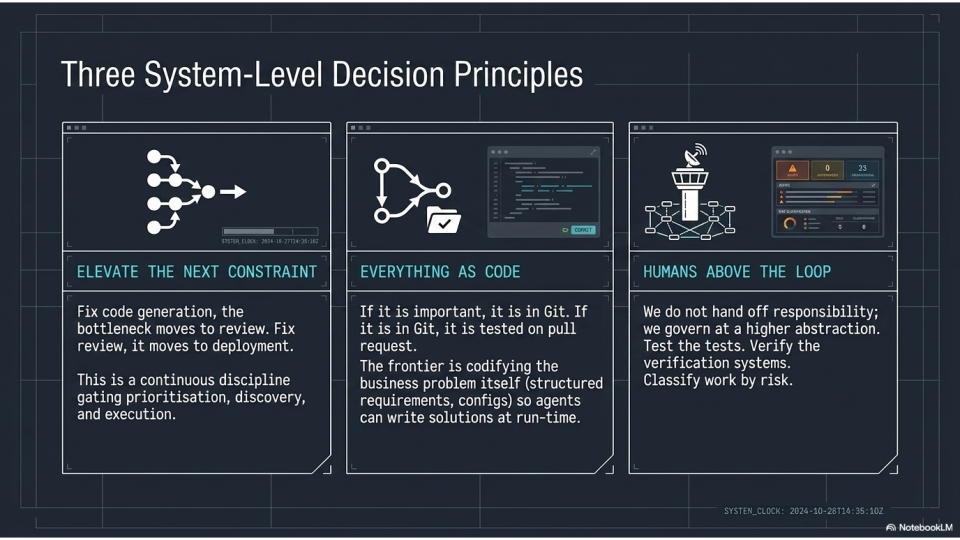
Humans Above The Loop
Trying to use the traditional Software Development Lifecycle (SDLC) bakes in bottlenecks by forcing developers to be in the loop. A new Agentic Development Lifecycle (ADLC) is needed that works the way agents work and places the humans above the loop.
This needs three system-level principles:
Elevate the next constraint: develop the discipline to analyse where the bottleneck is, then go fix it.
Everything as code: Agents unambiguously understand code, not intent hidden in natural language.
Humans Above The Loop: Scrutinise the verification systems closely, and the written code according to risk.
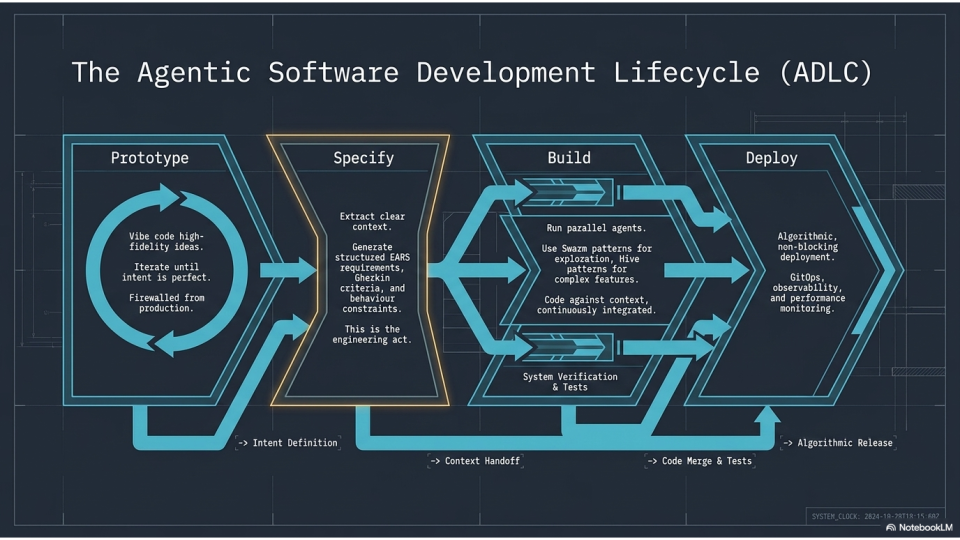
ADLC
Adopting an Agentic Software Delivery Lifecycle opens the ability to change our workflow to suit the problem: vibing to creatively solve problems, then being structured and rigorous when writing production grade code. This is the best of both worlds.
The key to doing this well is inserting a specification stage between prototype and build. This work is to extract project-specific context and learnings from the prototype that we’re confident is the right product-market fit. We combine with layers of context to make sure the agents know just enough, no more no less, to write quality code.
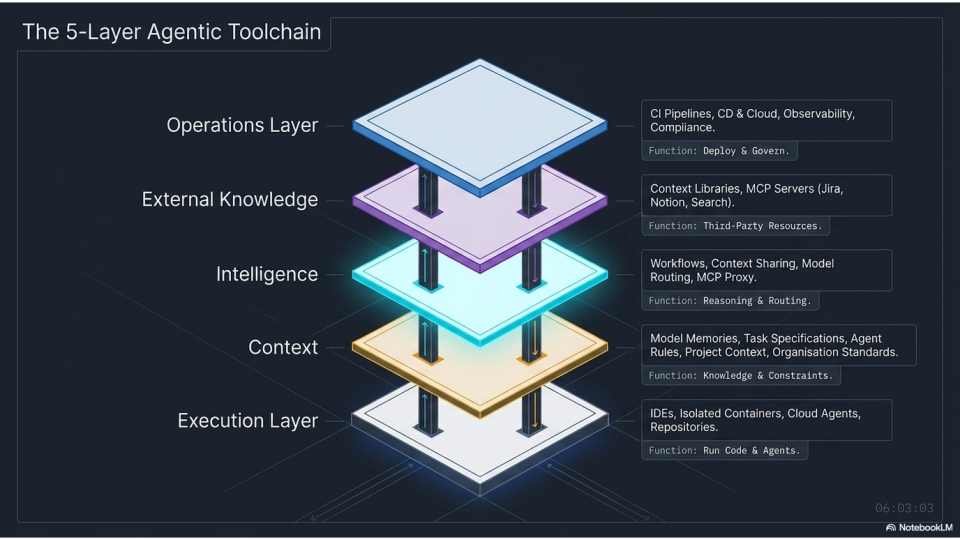
The new technology toolchain is the context stack. The goal is to achieve necessary and sufficiency with the minimum amount of context; the more the LLM uses its token budget on context, the less there is for actual work. At the bottom of the stack is the context the agents see at every prompt. To reach context further up the chain, the agent must be prompted to go look when it needs to.
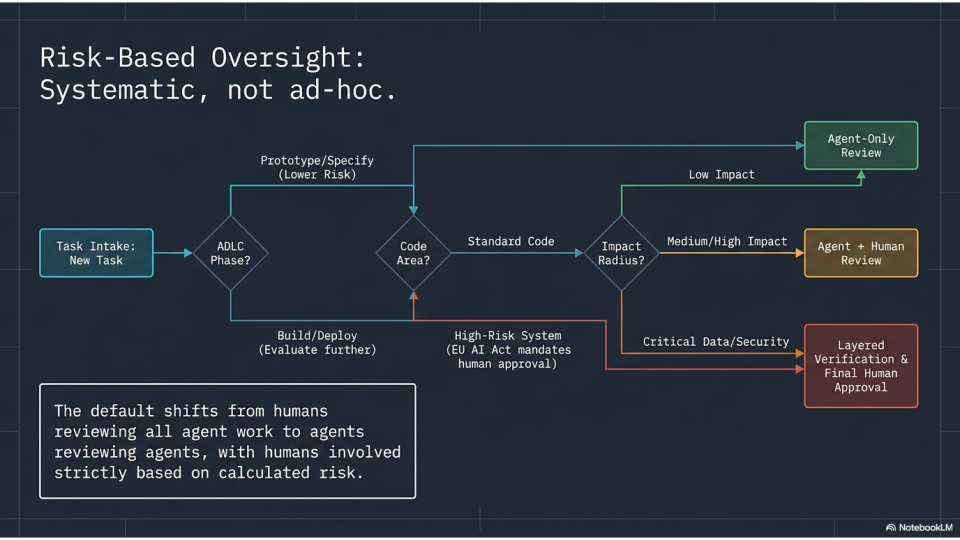
Risk-Based Oversight
Humans-Above-The-Loop doesn’t mean keeping delegating responsibility to agents and living life YOLO. It means being mindfully selective in how to scrutinise the work. Select on the basis of risk: what is the consequence of the code erroring, what run-time mitigations are there, how consequential is recovery from the error. These are all quantitative trust measures, not qualitative feelings. Human attention becomes the key resource to be strictly prioritised. This is the only way to stay on top of the sheer volume of work that will be produced.
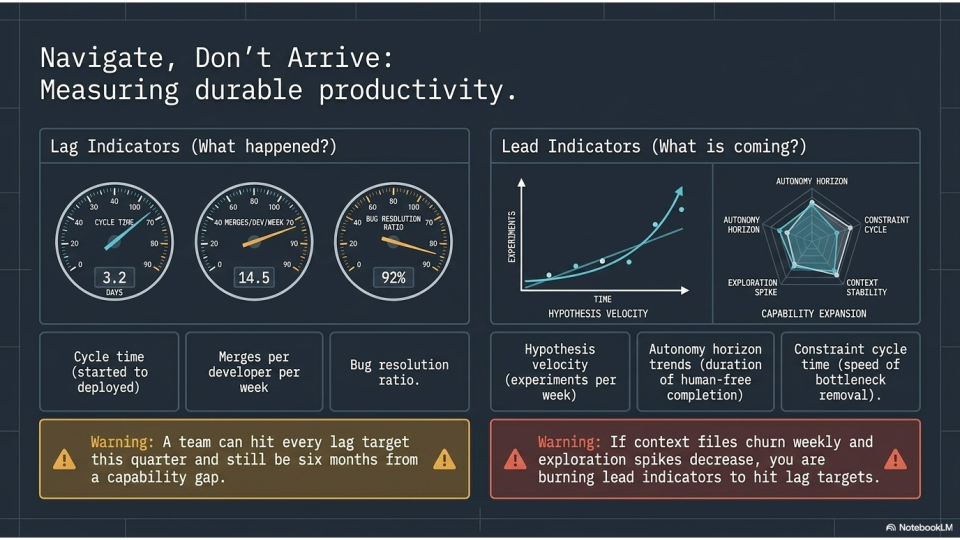
Learn By Doing
This industrial revolution has only just begun, we don’t know where our newfound ability to decouple output from cognitive labour will take us. So don’t plan on arriving any time soon. Instead, develop the skills to be able to navigate: measure how agent-first development yields productivity gains and measure that the productivity gains are durable.
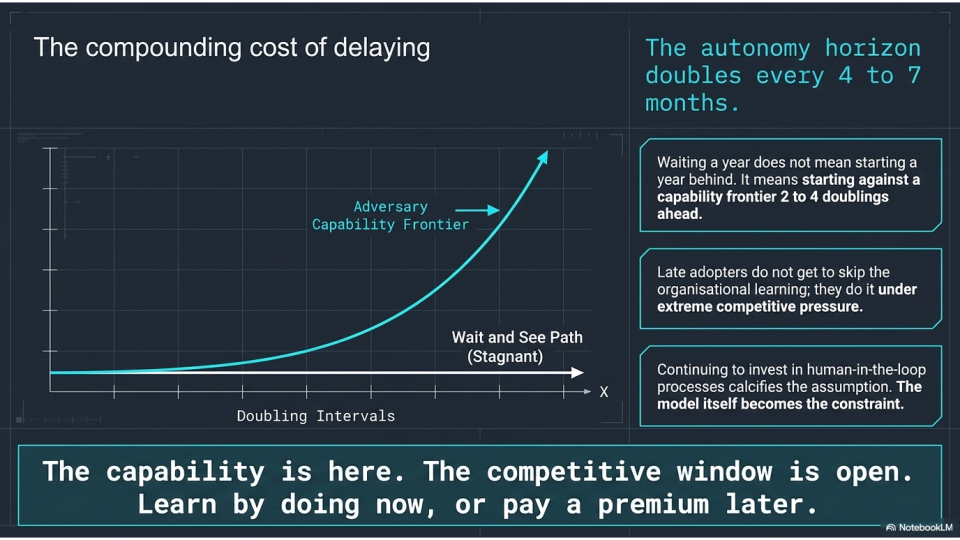
And as with all industrial revolutions, actively engage with this agentic revolution. Otherwise you could be left behind by competitors and by the technology.
© Mind Rocket Services Ltd 2026. All rights reserved.
Avi Sinharay
CEng, MIET, MEng, MA (Cantab.)
Fractional CTO, Director/VP of Technology
Core Expertise
Technology Leadership, AI Native Dev, Operating Model Design, Engineering Culture
Domains
Health Tech, Media Tech