
Follow the Constraint
We know that becoming agent-first is more than simply rolling out new tools, but a full organisation transformation. What are the new capabilities we should build? And in which order?
SOFTWARE ENGINEERINGAGENTIC DEVELOPMENT
5/23/20266 min read


We know that becoming agent-first is more than simply rolling out new tools, but a full organisation transformation. What are the new capabilities we should build? And in which order?
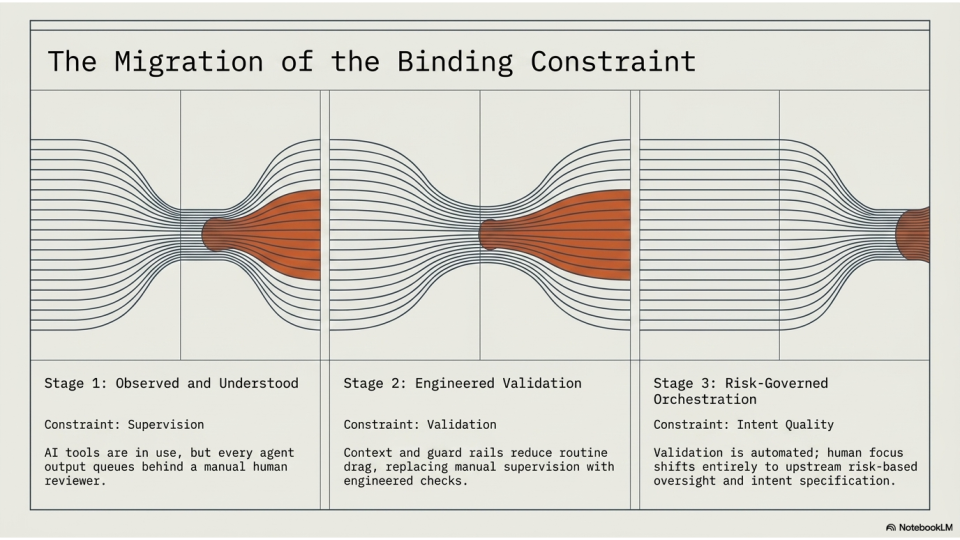
The answer, as always, is to see how the binding constraint migrates. Let’s zoom in on how the binding constraint migrates through the maturity stages: devs as supervisor, to reviewer to orchestrator.
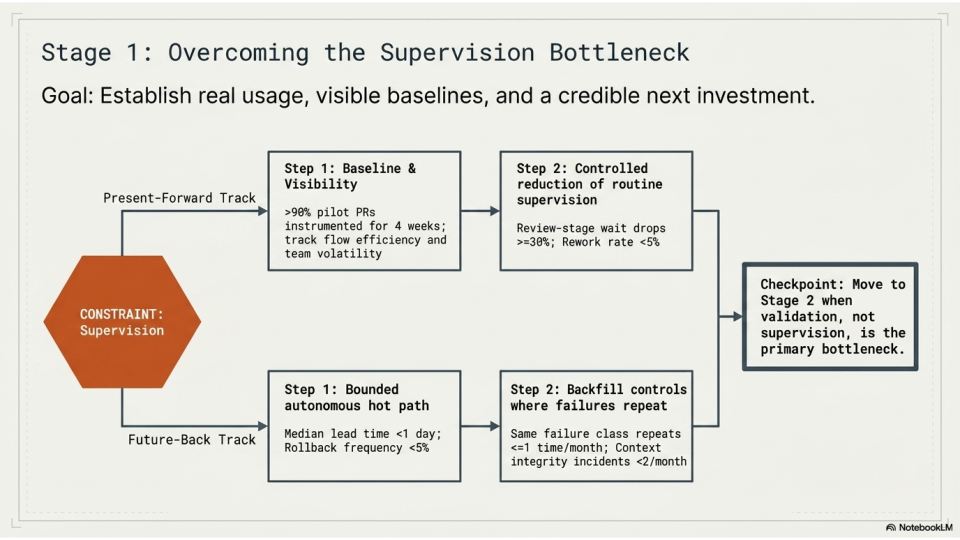
At Stage 1: Overcome the Supervision Bottleneck
The first stage addresses the most visible constraint in early adoption: every agent output queues behind a human reviewer. Elevate the Next Constraint says this supervision overhead is the binding bottleneck and no other improvement will yield system-level gain until it is addressed. The goal is not to remove supervision immediately; it is to make the constraint visible, establish baselines, and create the conditions for supervision to narrow safely.
Primary goal: establish real usage, visible baselines, and a credible next investment.
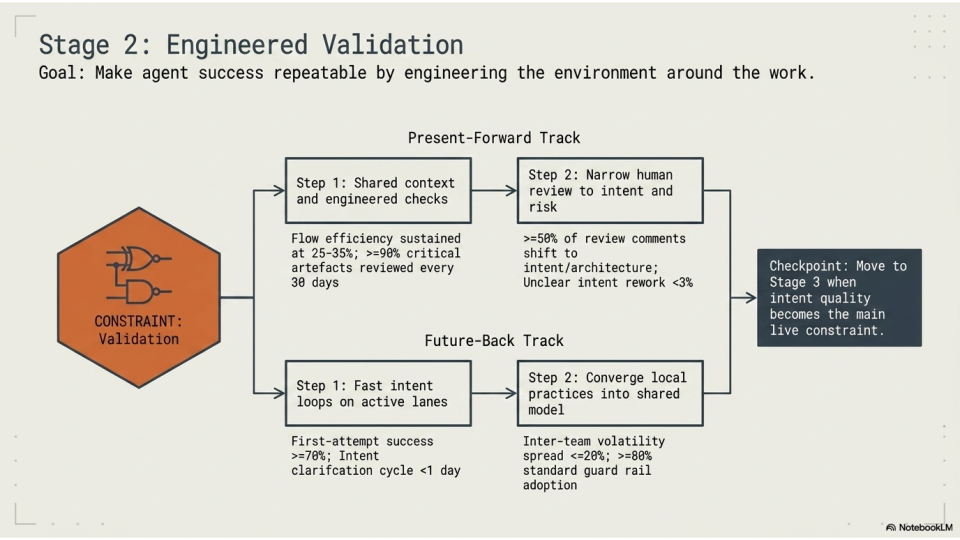
At Stage 2: Engineered Validation
Once supervision narrows, the constraint migrates to validation: are the outputs correct, compliant, and consistent? Everything as Code is the principle that resolves this: codify standards, guard rails, and context so that validation becomes automated and repeatable rather than dependent on individual reviewer judgement. The goal is to engineer the environment so agents succeed more often and human review narrows towards intent, risk and architecture.
Primary goal: make agent success more repeatable by engineering the environment around the work.
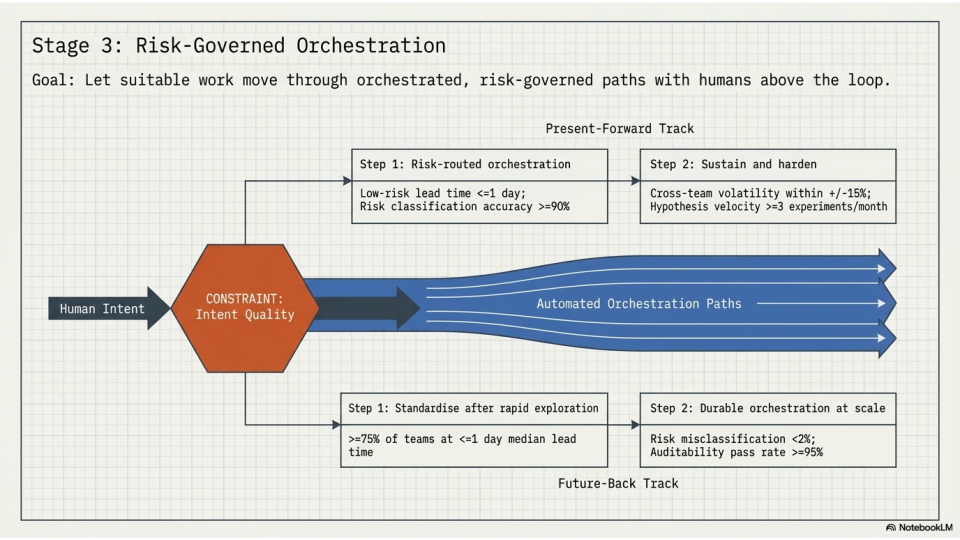
At Stage 3: Risk-Governed Orchestration
When validation is dependable, the constraint moves upstream to intent quality: are we specifying the right work clearly enough for autonomous execution? Humans Above The Loop is the principle at work: the human role shifts from checking outputs to governing the verification systems and shaping the intent that drives them. The goal is to let suitable work move through orchestrated, risk-governed paths whilst humans concentrate on the decisions that require judgement.
Primary goal: let suitable work move through orchestrated, risk-governed paths with humans above the loop rather than inside every step.
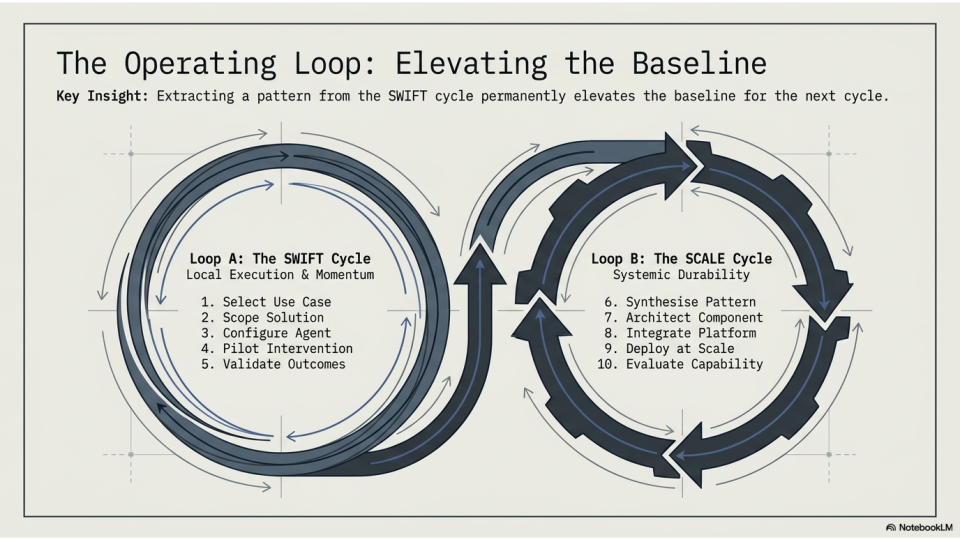
The Operating Loop: SWIFT & SCALE
The Operating Loop is what comes after. The Operating loop is Elevate the Next Constraint turned into a repeating practice. The metrics reveal where the system is struggling; the Operating Loop converts that signal into a structured intervention. It’s the same loop irrespective of maturity stage or implementation path.
Loop B: The SCALE Cycle (Organisation Durability)
This loop focuses on systemic capability. This is how the organisation gains velocity without paying the innovation tax.
6. Synthesise Collateral: Extract the successful SWIFT intervention into a generalised, reusable pattern, architectural standard, or platform tool. Make it easier to use the tool than not.
7. Communicate Learnings: Actively disseminate the synthesised collateral across the organisation. Choose from the full range of business change tools, from documentation wikis to internal marketplaces to scores in end-of-year appraisals.
8. Assess Reuse: Monitor organisational telemetry to verify that other teams are actually adopting the collateral and achieving similar productivity gains.
9. Let Go of Legacy: Formally deprecate and sunset the outdated processes, tools, or cognitive load that the new capability replaces. Actively manage process debt.
10. Evolve Capability: The baseline for the next SWIFT cycle is now permanently elevated.
Loop A: The SWIFT Cycle (Localised Execution)
This loop focuses on a localised capability: zoom in on a use case, elevate then fix the binding constraints, until it’s time to move on.
1. Select Use Case: Isolate a specific, bounded workflow or component. Avoid scope creep; do not attempt to optimise the entire system simultaneously.
2. Watch Metrics: Establish baseline telemetry. You cannot improve what you cannot accurately measure; ensure quantitative data exists before planning any intervention.
3. Isolate Constraint: Identify the next single most significant bottleneck currently limiting the Watch Metrics within the selected Use Case.
4. Fix Constraint: Deploy a targeted engineering or process intervention to remove the binding constraint. Or elevate it; improve its metric until it’s no longer the binding constraint.
5. Terminate Loop: When the cost of further intervention exceeds the engineering value gained it’s time to move on to the next highest-priority Use Case.
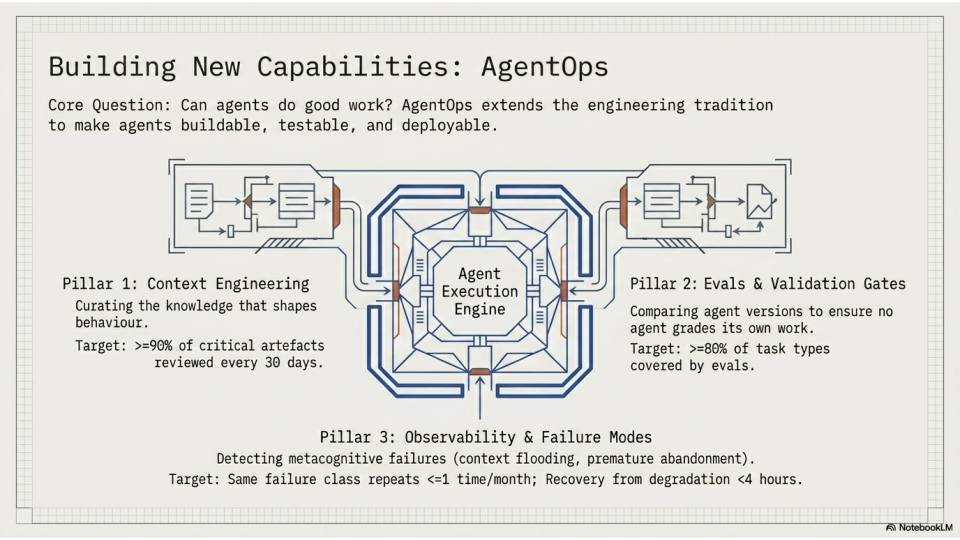
Building New Capabilities
Administering these loops is a responsibility of all development teams. However, in the tradition of DevOps and Cloud Ops and ML Ops, a specialised team is needed to operationalise the practices that make agents buildable, testable and deployable, as demanded by the principle: Everything As Code. Moreover, AgentOps administers Agentic Service Management: practices that make agents governable, trustworthy and compliant, as demanded by the principle: Humans Above The Loop.
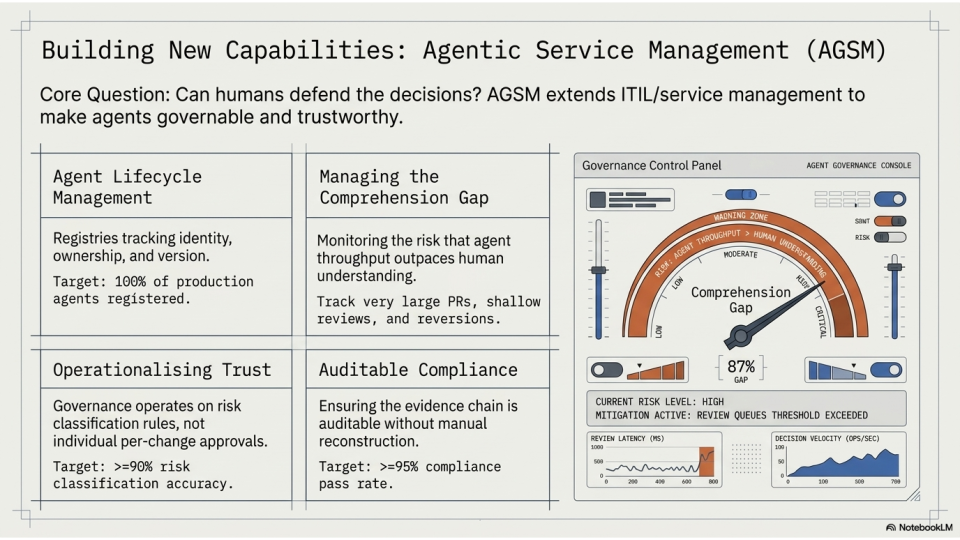
AgentOps engineers the conditions under which agents can act well. AGSM engineers the conditions under which humans can defend the decisions those agents made.
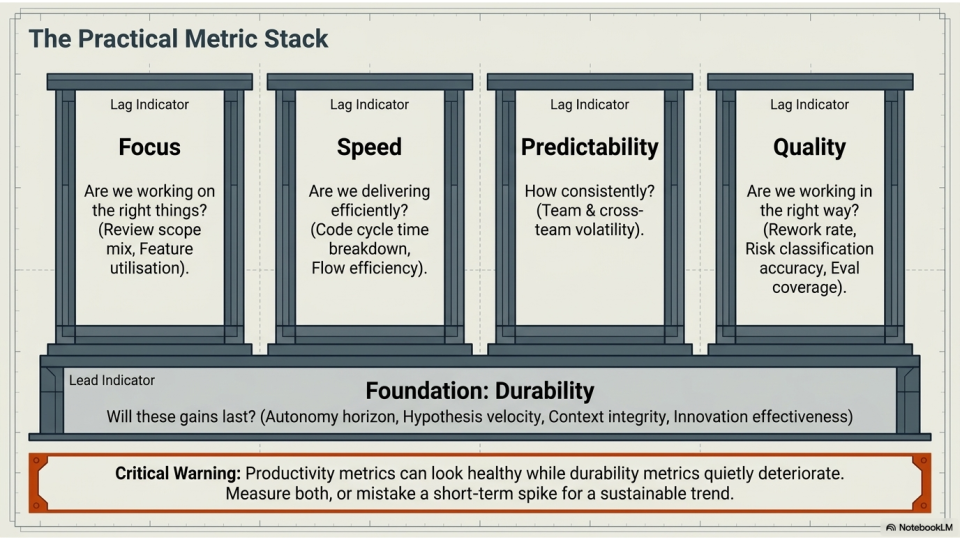
The Practical Metric Stack
Combine both lagging productivity metrics and leading durability metrics to track this transformation.
Focus Metrics (Are we working on the right things?) e.g.:
Human review scope: Whether review comments concentrate on intent, architecture, and exceptions rather than routine correctness.
Feature utilisation: Whether shipped capability is adopted; product analytics, usage studies, or qualitative feedback.
Intent-to-execution latency: Median elapsed time from a human prioritisation decision to agent action; ceremony replacement signal.
Predictability Metrics (How consistently are we delivering?) e.g.:
Team volatility: Use to see if one team’s completion pattern is unstable.
Cross-team volatility: Use to see whether the operating model is uneven across teams.
Speed Metrics (Are we delivering efficiently?) e.g.:
Code cycle time: Best when you need to see where PRs wait: first review, approval, merge, deployment.
Lead time for change: Same underlying measure as code cycle time; use this label for DORA or executive reporting.
Flow efficiency: Essential for proving whether a “speed” problem is really a waiting problem.
Durability Metrics (Will these gains last?) e.g.:
Autonomy horizon: how long agents can work before intervention
Hypothesis velocity: How fast hypotheses move from idea to evidence
Context integrity: Whether documentation, runbooks, and agent context stay accurate; freshness checks, onboarding friction, drift signals.
Quality Metrics (Are we working in the right way?) e.g.:
Rework rate: Reopens, defect bounce-backs, or follow-on fixes; links flow to quality and sustainability.
Risk classification accuracy: Whether risk tiers match reality; retrospective comparison of incidents and classifications.
Comprehension-gap indicators: Composite of very-large-PR rate, shallow-review-time rate, reversion rate, and reviewer uncertainty signals; tracks whether throughput is outpacing comprehension.
The Next Constraint
This Roadmap turns the Vision and Journey into planning decisions and operational actions. Three principles resolve the trade-offs: Elevate the Next Constraint tells you what to do next; Everything as Code tells you how to make it stick; Humans Above The Loop tells you where people belong in the system.
The practical path is: calibrate the posture to the organisation’s appetite and capacity; walk the stages, using the Operating Loop to find and fix the binding constraint at each one; build the new capabilities (AgentOps for the engineering discipline, AGSM for the governance and trust infrastructure, a post-ceremony operating cadence) as the system matures; and keep recalibrating as constraints migrate and the environment shifts.
The organisations that move best through this journey will not be the ones that generate the most plans. They will be the ones that learn fastest where work is waiting, fix the next bottleneck before the previous fix wears off, and build the engineering, governance and human capabilities that make the operating model durable as autonomy rises.
© Mind Rocket Services Ltd 2026. All rights reserved.
Avi Sinharay
CEng, MIET, MEng, MA (Cantab.)
Fractional CTO, Director/VP of Technology
Core Expertise
Technology Leadership, AI Native Dev, Operating Model Design, Engineering Culture
Domains
Health Tech, Media Tech